

Why is LED Display Used for Control Room and Broadcasting?

Why is LED Display Used for Control Room and Broadcasting?
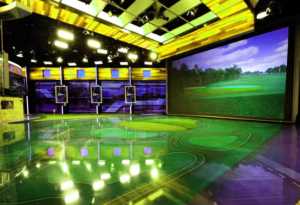
Why is LED Display Used for Control Room and Broadcasting? With the development of LED, LED displays are increasingly applied as background walls in television studios and large-scale television relaying activities. It provides a large variety of vivid and gorgeous background images with more interactive functions. It displays both static and static scenes, connecting the performance and the background.
It perfectly combines the atmosphere with the activity, boasting functions and effects that other stage art equipment doesn’t have. However, to give full play to the effect of LED displays, when selecting and using LED displays for broadcasting needs to pay attention to the following aspects:
Why is LED Display Used for Control Room and Broadcasting?
Proper shooting distance.
It is related to the pixel pitch and fill factor of LED displays. Displays with different pixel pitch and fill factors require different shooting distances. Take a LED display with a pixel pitch of 4.25mm and a filling factor of 60% as an example, the distance between it and the person being shot should be 4—10m, ensuring excellent background images when shooting.
If the person is too close to the display, the background will be grainy and easy to have a more effect when taking a close shot.
The pixel pitch should be as small as possible.
The pixel pitch is the distance between the center of a pixel to the center of the adjacent pixel of LED displays. The smaller the pixel pitch, the higher pixel density and screen resolution, which means closer shooting distances but higher prices.
The pixel pitch of LED displays used in domestic television studios is mostly 1.5—2.5mm. The relationship between the resolution and the pixel pitch of the signal source should be carefully studied for a consistent resolution and a point-by-point display so as to achieve the best effect.
The regulation of color temperature.
As background walls in studios, the color temperature of LED displays should be consistent with the color temperature of the lights, so as to obtain accurate color reproduction during shooting. As required by programs, studios will sometimes use bulbs with a low color temperature of 3200K or with a high color temperature of 5600K. To obtain the best shooting effect, LED displays should be adjusted to the corresponding color temperature.
Fine using environment.
The life and stability of LED large displays are closely related to the working temperature. If the actual working temperature exceeds the specified working temperature, displays will be seriously damaged with the service life greatly shortened. In addition, the threat of dust cannot be ignored. Too much dust will reduce the thermal stability of LED displays and cause electric leakage.
In serious cases, displays may be burnt. Dust can also absorb moisture and corrode electronic circuits, causing elusive short-circuits. Therefore, it is never late to keep studios clean.
LED displays show clearer pictures with no seams.
It is energy-saving and environment-friendly with lower power consumption and less heat generation. It has a good consistency, displaying pictures with no difference. Small-size cabinets make it possible to have smooth shapes. It has wider color gamut coverage and is less likely to be subject to reflections than other products It has high operational reliability and low maintenance cost.
Of course, only when used properly can these advantages of LED displays be fully realized and make a great LED display solution for broadcast Therefore, we should choose appropriate pixel pitch when using LED displays in TV programs.
We should understand their characteristics and select products as background walls according to different studio conditions, program forms and requirements. In doing so, the effect of new LED display technologies can be realized to the maximum extent. At now the top of the pyramid of the LED display market, the control room market requires much more than ordinary products.
It has strict requirements for the overall application The small spacing LED display has been widely praised and favored for its seamless splicing, excellent image quality, flexible operation and rich information. It is fair to say that the small spacing LED display for control room greatly meets the using requirements of command and dispatch centers.
For more information’s about EGYLED products, Click here.
Why is LED Display Used for Control Room and Broadcasting?

Why is LED Display Used for Control Room and Broadcasting?
Broadcasting and control centers prefer small spacing LED displays. Small spacing LED displays have multiple advantages that perfectly match the requirements of command and dispatch centers.
As we all know, command and dispatch centers need to display rich and complex signals and receive more digital signals than video signals, which put forward stringent requirements on LED products and technologies such as high-resolution display, high grayscale reproduction display in low brightness, high refresh rate, high consistency and uniformity, low noise and heat dissipation.
Moreover, it even requires a better lasting comfortable viewing experience. Small spacing LED displays have many obvious advantages when being applied in command and dispatch centers.
Firstly, equipment used in command and dispatch centers is characterized by round-the-clock and uninterrupted operation, strong information collection, quick response, overall coordination and comprehensive dispatch capability while coping with huge data volume.
The stability, reliability, durability and easy maintenance are key factors why command and dispatch centers choose small spacing LED displays. The new appearance of small spacing LED displays is convenient to be disassembled. It is beautiful and can reduce breakdowns caused by flat cables and the like, greatly reducing the failure rate of displays and the investment of manpower and finance for later maintenance.
2- Temporary emergency command and dispatch centers need to deal with major events and natural disasters at any time.
Emergency commanding may encounter various environments and emergencies, such as high-altitude areas with low air pressure and temperature. In addition to stability, displays are usually required to be easily installed and transported Small spacing LED displays are thin and light, which means they can be flexibly disassembled and assembled and cope with various environments and emergencies.
At present, large displays in command centers need to have ultra-high resolution and large format, and to collect, store, manage and display the information from real-time large format images such as geographic information, road network maps, satellite cloud images and panoramic videos. Seamless splicing is the advantage of small spacing LED displays. Images will not be split by stitching. There is no brightness difference between units.
3- Smaller and smarter spacing may be the trend of displays in future command centers.
The advantages above-mentioned show that small spacing LED displays will be increasingly popular in command and control rooms. It will become, in the information era, an excellent tool to improve communication efficiency and realize efficient use and sharing of information. However, small spacing LED displays still have many technological shortcomings.
Enterprises need to innovate by putting more investment into research and development. Smaller pixel pitch means higher definition for images, finer content and larger visible area, which fully meets the requirements of command (control) centers for the details of images.
However, due to the limitations of the existing small spacing LED technology, displays of command and control centers are required to have no visible stitching when black displays are seen from the front and side. Displays should have good consistency with perfect colors in low brightness, high reliability and stability. In the future, the application of small spacing LED displays in command and control rooms will be more intelligent, digital and network related.
For example, in the traffic command and dispatch center, small spacing intelligent LED displays will be bound with the real-time information of the traffic network. Images of all traffic routes on displays can be controlled and showed in the LED display at the traffic dispatch headquarters.
Intelligent instructions can greatly reduce urban traffic jams and traffic accidents. More importantly, for small spacing LED displays applied in command and dispatch centers, the research and development need to be more user-targeted to solve personalized needs.
With the rapid accumulation of information and the increasingly higher technical requirements, traffic dispatch, enterprise introduction and data monitoring are relying more and more on small spacing LED displays. Its status as the intelligence window for the coordination of command centers and dispatch hubs becomes more important than ever.
Therefore, LED displays will have a broader development space in the field of monitoring and dispatching, which is also an important force to the growth of LED display application market. The application of small spacing LED displays in command centers is not only technically inevitable, but also a choice of enterprises in the market.
It is also because of the instinctive drive of enterprises to pursue capital benefits and expansion. In the future, with clearer market expansion trend and the sharp rise of profitability, the market for small spacing LED displays will be ignited. With bigger breakthroughs in high-definition development and intellectualization in the future, the competitive advantage of small spacing LED displays in command centers will further manifest.
Now we know Why is LED Display Used for Control Room and Broadcasting?
For more information’s about EGYLED led screen solutions, Click here.